
$VPG: Stating $6M Humanoid Order Target Publicly

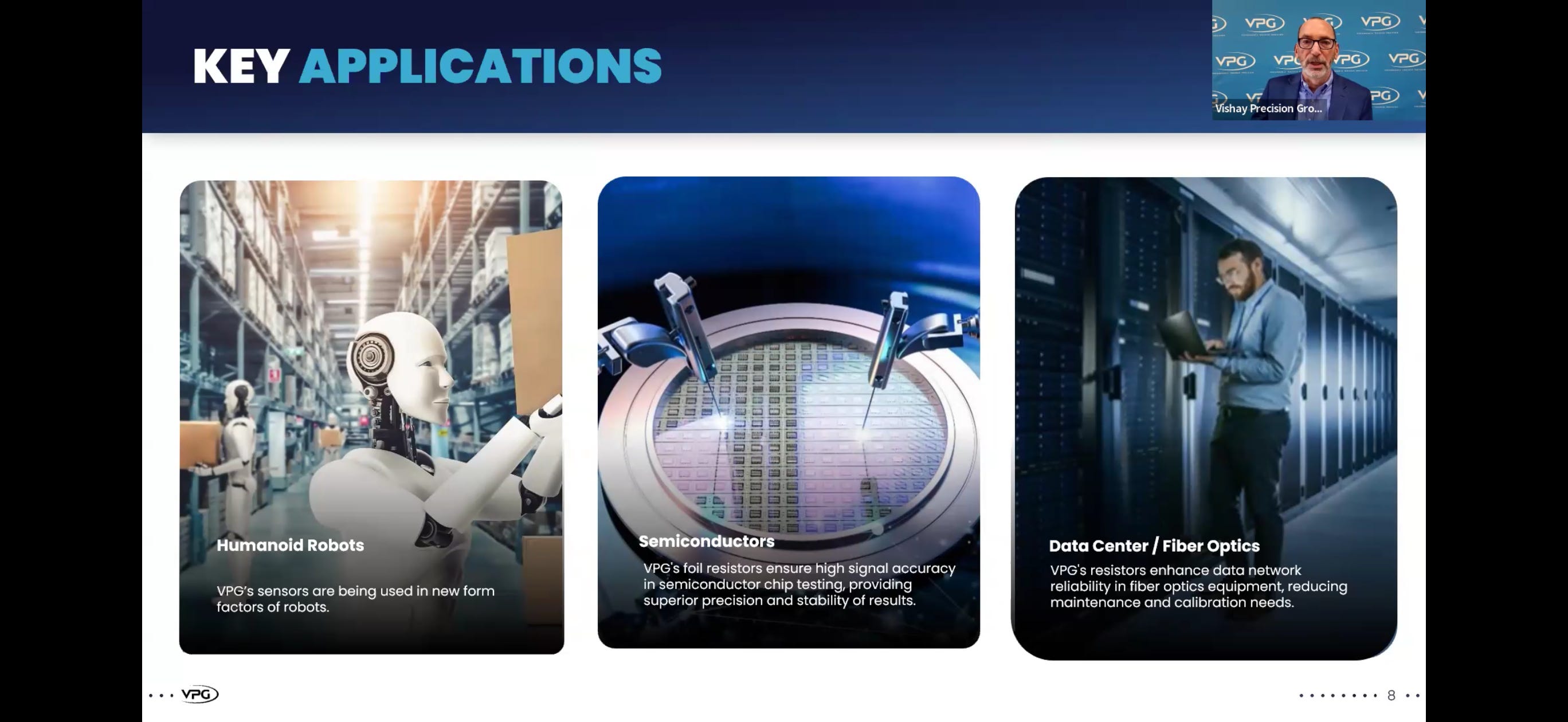
$VPG identified three growth markets today: Humanoid Robots, Semiconductors (Testing), Fiber Optics (Lasers). Additionally, this is the first time they've publicly put out their $6M humanoid order goal for this year. One can assume that if Customer 1 (Tesla) and 2 (Figure) ramps according to schedule, that number will be beaten by a large amount.
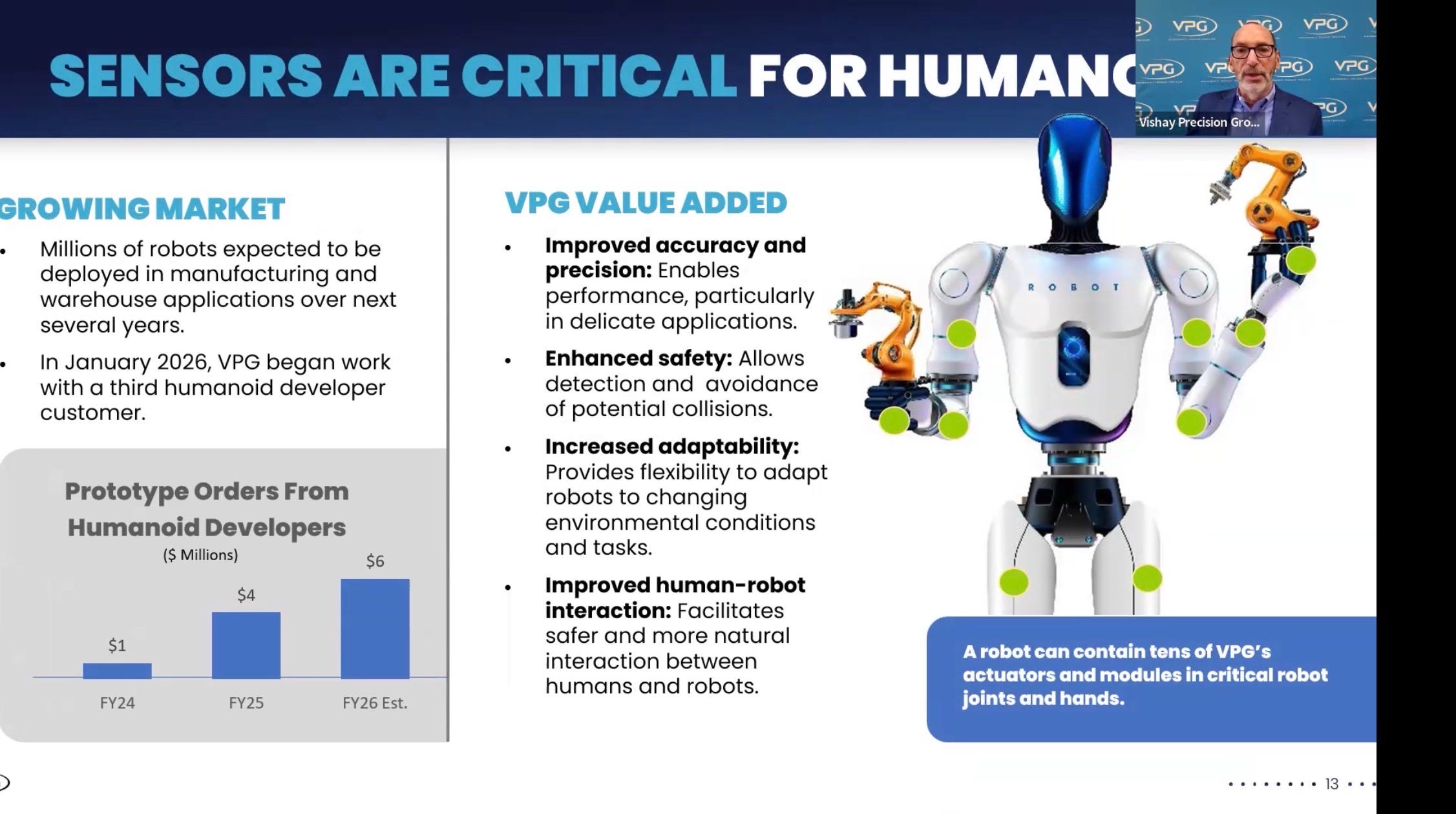
Management has been vocal in earnings calls and most recently at the Sidoti Small-Cap Conference (March 19, 2026), framing it as part of the broader shift to "Physical AI" where robots need real-time tactile feedback to move and "feel" like humans. Key quotes and outline from management (Sidoti transcript):
- "We’re supplying torque and tactile sensors that are helping humanoid developers solve really fundamental engineering challenges around stability and dexterity, essentially turning a hunk of metal into something that moves like a human and feels like a human."
- "Humanoid robots is one of the fastest-moving areas we’re currently serving... This is really an exciting time for VPG."
- Working with three humanoid developer customers (two advanced, one new in late 2025).
- Orders traction: Nearly $2M in prototype orders (Oct 2025–Jan 2026, including third customer); ~$1.5M from second customer (mostly tactile/finger "touch"); cumulative ~$5M prototypes over recent years. First customer: initial orders for dozens of robots (each using 20–30 sensors), follow-on for hundreds expected in Q2 2026, with potential ramp to "hundreds of robots per week by end of 2026" (subject to customer timelines). "2026 will be a pivotal year for the humanoid market."
VPG at their investor conference gave some great clarity and is successfully advancing its position within the humanoid robotics market by transitioning key partnerships from the engineering phase to early production. The company is currently focused on two primary customers that represent distinct high-growth opportunities.
Customer 1: Industrial Production
Customer 1 has transitioned from initial engineering collaboration to the final system setup stage. This partner is currently executing early alpha builds and has placed orders for dozens of robots. Each unit incorporates 20 to 30 VPG sensors to ensure precision and safety. VPG anticipates a significant order for hundreds of units in the second quarter of 2026. If the customer maintains its current timeline, production could scale to hundreds of robots per week by the end of the year. This represents a major milestone in moving from specialized prototypes to repeatable manufacturing.
Customer 2: Advanced Tactile Sensing
The partnership with Customer 2 highlights the specialized technical capabilities of VPG sensor technology. The company recently secured 1.5 million in orders specifically for tactile sensing applications. These sensors are integrated into the robotic fingers to provide a human-like sense of touch and feel. This capability is essential for robots performing delicate or complex manipulation tasks. VPG expect to establish clear volume projections once the customer finishes its current round of prototype evaluations.
VPG just confirmed they're actively working with both of their customers seeing orders and visibility, which I have known. This should dispel any concerns around being designed out via Chinese suppliers.
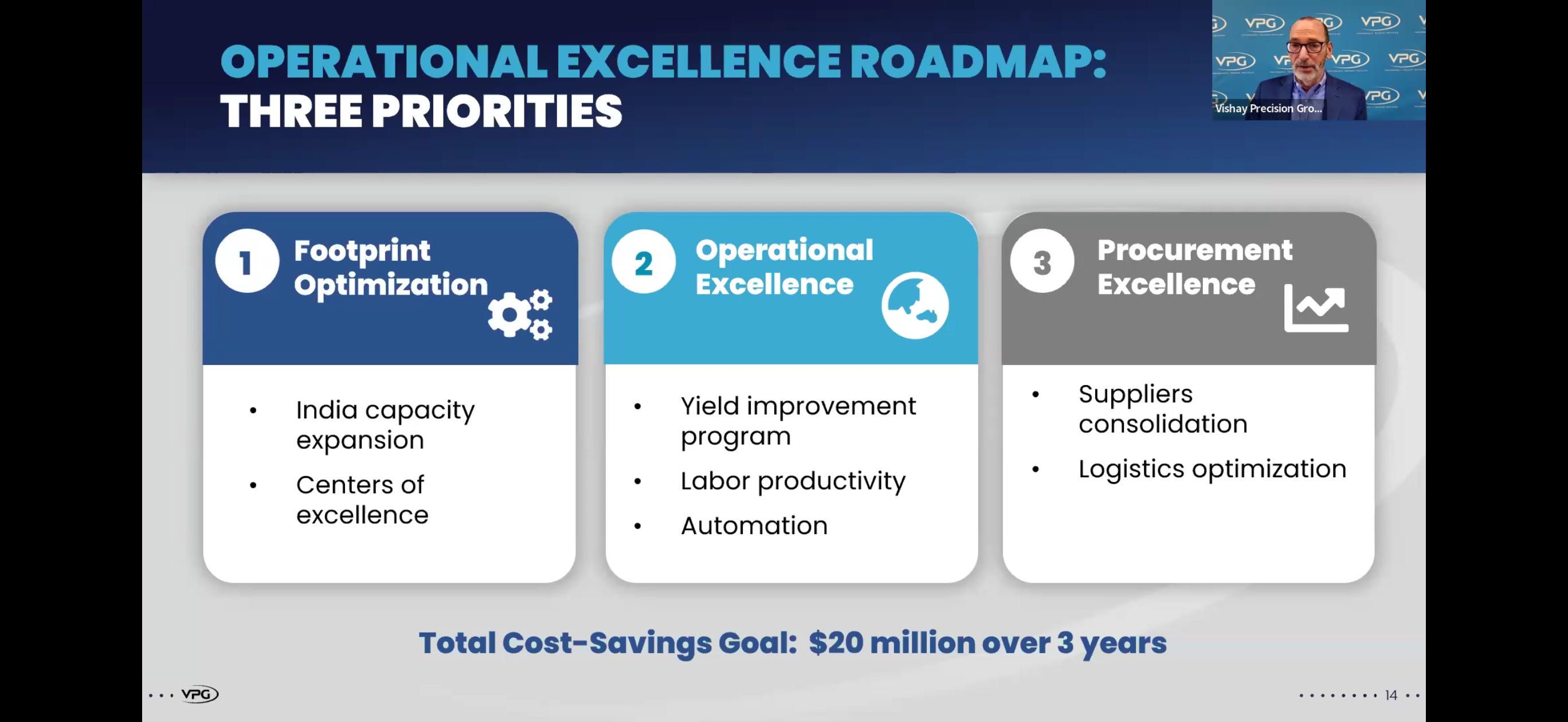
In addition, they have now publicly outlined $20M of COGS savings over the next 3 years, implying targeting a gross margin of ~45% within 3 years. VPG IR stated on the call they will be outlining their 3-5 year targets on their Q2 earnings call in the first week of May. They said to expect them to meet or beat all their old metrics (Old targets: Low teens revenue growth, 45% gross margin, 18% operating margin, 22% EBITDA margin, and new BD incremental revenue of ~$100M over next 3-4 years).
In the new long-run targets, I expect us to see 45% gross margin target stay the same with operating margins targeted to reach 20%+, EBITDA margin of 24%+, and revenue growth target in the high teens or maybe even low 20% depending on their passiveness/aggressiveness with forecasting the humanoid pipeline. If they achieve a 20% growth rate at 24% EBITDA margin, that would imply 2028 EBITDA at $128M and 2030 EBITDA at $184M. Assuming a 35x EV/EBITDA ratio in both years and the same margins, reflecting a high growth business levered to the humanoid robotics revolution, that implies a market cap between $4.5B - $6.5B.
From VPG’s Micro-Measurements division: Custom foil strain gauges bonded into actuators/joints/hands for real-time force/torque feedback, grip control, balance, and safety. Compact, customizable, durable—perfect for tight spaces and repetitive use. Applications include joint torque sensing, finger force control (e.g., delicate grasping without crushing objects), and proprioception. This is high-leverage BOM content (multiple sensors per joint/limb) with recurring potential as fleets scale.
Thanks for this update. Based on your comprehensive research how strong is VPG’s Bulk Metal® Foil technology. It seems like once it’s designed into a robot it becomes sticky. I was reading about fiber optic strain sensing. Anything to worry about?